
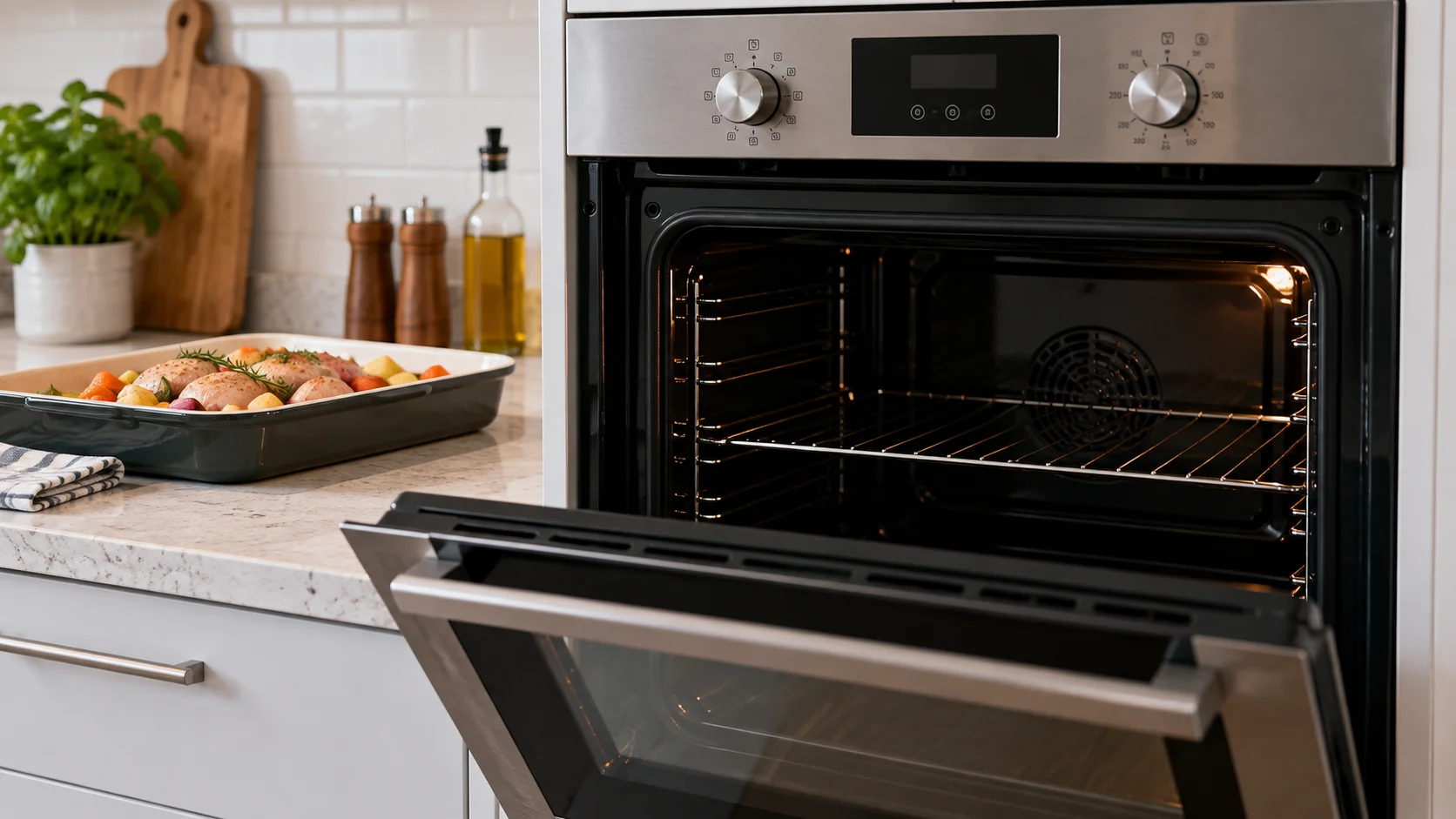
An oven not heating up can turn a normal meal into an unexpected appliance problem. Sometimes the cause is relatively simple, such as a power or setting issue. In other cases, a heating element, igniter, temperature sensor or control component may need professional attention.
The exact cause can also depend on whether you have a gas or electric oven. Before assuming that a specific part has failed, start with a few safe checks and pay attention to what the oven is doing: whether it has power, whether it begins to preheat, whether it reaches the selected temperature and whether the cooktop still works.
If you're dealing with an oven not heating up and basic checks do not identify the cause, the appliance may need professional diagnosis.
What to Check First When Your Oven Is Not Heating
Before looking at individual components, check a few basic things that can affect normal oven operation.
Confirm that the appliance has power, verify that the correct cooking mode and temperature have been selected, and check whether the display or interior light is functioning. For an electric oven, look at the electrical panel only if you can do so safely and check whether the oven's breaker appears to have tripped.
For a gas oven, do not attempt to disconnect gas fittings or repair the gas supply yourself. If you notice a gas odor or suspect a supply problem, stop using the appliance and arrange appropriate professional assistance.
If the oven has power but still does not heat, one of the following conditions may be involved.
10 Common Reasons Your Oven Is Not Heating Up
1. The Oven Is Not Receiving Power
A loss of power is one of the first things to rule out when an oven will not heat.
An electric oven requires a proper electrical supply to operate its heating system. Depending on the appliance, the display or lights may also provide clues about whether power is reaching the unit.
Check whether the oven appears completely unresponsive. If the appliance plugs into an accessible outlet, confirm that the connection has not become loose. Avoid pulling the appliance out or accessing wiring if doing so is unsafe.
If the oven has power and the controls operate normally, continue with the next checks.
2. The Circuit Breaker Has Tripped
An electric oven may stop heating if the circuit supplying the appliance has tripped.
Check your home's electrical panel and see whether the oven or range breaker is in the expected position. If a breaker has tripped, follow the panel manufacturer's normal reset procedure only if you are comfortable doing so.
A breaker that trips repeatedly should not simply be reset over and over. Repeated tripping may indicate an electrical problem that should be evaluated before the oven is used again.
The competitor article also places power supply and a tripped circuit breaker among the first conditions to check when an oven is not heating.
3. A Heating Element Is Not Working
Electric ovens commonly use heating elements to produce heat for baking or broiling. If an element is damaged or no longer operating correctly, the electric oven may not heat up as expected.
With the oven turned off and cool, you may be able to visually inspect an exposed element for obvious cracking, blistering or physical damage. Visible damage can be useful information, but the appearance of the element alone does not confirm every possible failure.
Electrical testing and element replacement involve high-voltage components, so internal diagnosis should be handled by a qualified technician.
The competitor also identifies a failed heating element as a major oven-heating cause and recommends professional replacement because of the voltage involved.
4. The Temperature Sensor Has a Problem
The oven temperature sensor helps the appliance monitor internal temperature. If the sensor is damaged, incorrectly positioned or providing inaccurate information, the oven may heat inconsistently or fail to reach the selected temperature.
This type of problem may appear differently from a completely cold oven. For example, you may notice that food takes much longer to cook, the oven stops heating too early or the temperature seems noticeably different from the setting.
Sensor locations and designs vary between models, so avoid bending, removing or testing the component unless the manufacturer's instructions specifically describe a homeowner-safe procedure.
Temperature sensor problems are also included in the competitor's main troubleshooting sequence.
5. The Gas Oven Igniter Is Weak or Defective
For a gas oven, the igniter is one possible reason the appliance does not heat.
A failing igniter may prevent the burner from lighting normally or may result in delayed or inconsistent ignition. You may notice that the oven takes longer than usual to begin heating or does not produce heat even though the controls appear to work.
Because the igniter works as part of the oven's gas ignition system, replacement and internal testing are better left to an appliance technician.
The competitor article also treats a defective igniter as one of the main gas-oven causes and points to delayed or failed ignition as relevant symptoms.
6. The Controls or Temperature Setting Are Incorrect
Sometimes the oven is functioning, but the selected mode, temperature or control setting is preventing the expected heating cycle.
Make sure the appliance is set to the intended mode, such as Bake rather than another function. On ovens with physical knobs, confirm that the knob is secure and aligned properly. On electronic models, check that an unusual mode such as Demo or a delayed-start function has not been activated.
Control layouts vary significantly by manufacturer and model, so the owner's manual is the best reference for model-specific settings.
7. The Oven Temperature Needs Calibration
An oven that heats but consistently runs hotter or cooler than expected may have a calibration issue rather than a total heating failure.
Calibration adjusts how the oven interprets and maintains the selected temperature. Some electronic ovens allow a limited temperature adjustment through the control panel, but the process is model-specific.
If your oven is not getting hot enough, first confirm that the symptom is consistent rather than relying on a single cooking result. If the problem continues, the sensor, controls or another heating component may also need to be checked.
The competitor article includes recalibration as a separate cause when the oven appears to heat but the actual temperature does not match the expected setting.
8. The Oven Door Is Not Closing Properly
An oven door that does not close fully can allow heat to escape and make it difficult for the oven to reach or maintain the selected temperature.
Check for food debris or another obstruction around the door. Inspect the visible gasket for obvious damage and make sure the door closes evenly without needing to be forced.
A damaged hinge, door component or seal may require repair. The competitor likewise identifies a door that does not close correctly as one possible reason an oven struggles to heat properly.
9. There Is a Gas Supply Problem
A gas oven requires an uninterrupted gas supply for normal heating. If gas is not reaching the burner correctly, the oven may fail to ignite or heat.
This is not an area for extensive DIY troubleshooting. Do not loosen connections, open gas components or attempt to modify the supply line.
If there is any indication of a gas supply issue, stop using the oven until the problem has been evaluated appropriately. The competitor article also lists gas supply problems among the possible causes of an oven that will not heat.
10. The Thermostat, Selector Switch or Electronic Control Has Failed
Modern ovens use controls to determine cooking mode, temperature and when heating components should operate. Depending on the design, a thermostat, selector switch or electronic control can affect whether the oven heats normally.
These failures are difficult to confirm from symptoms alone because several components can create similar behavior. An oven that has power but does not start the expected heating cycle may therefore require electrical diagnosis.
Avoid accessing internal control wiring or replacing parts based only on a symptom. The correct component should be identified before repair.
The competitor's tenth cause similarly focuses on the thermostat and selector switch as components that can prevent normal bake or broil operation.
Why Is My Oven Not Heating but the Stove Works?
If the burners or cooktop work but the oven does not heat, that does not necessarily mean the entire appliance has lost power or fuel.
The oven and cooktop can rely on different heating and control components. A problem involving an oven heating element, igniter, sensor or oven-specific control can therefore affect the oven while the stove continues to operate.
This symptom does not identify a single failed component. The appliance type and individual oven still need to be evaluated before deciding what repair is required.
Why Is My Oven Not Getting Hot Enough?
An oven that produces some heat but never reaches the selected temperature may have a different problem from an oven that remains completely cold.
Possible conditions include temperature-sensor issues, calibration problems, heat escaping through the door or a heating component that is not operating correctly. First verify that the door closes properly and that the selected settings are correct.
If the oven is not getting hot enough consistently, professional diagnosis can determine whether the problem is related to temperature sensing, heating or control components.
Why Is My Oven Not Preheating?
If an oven is not preheating normally, pay attention to whether it eventually reaches temperature or remains cool.
An unusually long preheat can be associated with a heating element, igniter, sensor, door or control issue. Because the same symptom can have multiple causes, preheat time alone should not be used to determine which component needs replacement.
Persistent slow or failed preheating is a good reason to have the oven evaluated, particularly if other symptoms such as inconsistent cooking or delayed ignition are also present.
Should You Repair or Replace an Oven That Is Not Heating?
Whether repair or replacement makes more sense depends on the individual appliance.
Consider the age and overall condition of the oven, the component that has failed, the expected repair cost and whether the appliance has had repeated problems. A relatively straightforward repair on an otherwise reliable oven may make more sense than replacing the entire appliance.
On the other hand, a major repair on an older appliance with several existing problems may justify comparing the repair cost with replacement.
A technician can identify the actual problem first, which gives you better information for making that decision. The competitor article also considers appliance age, repair cost and the extent of the problem when discussing repair versus replacement.
When to Call for Oven Repair
Basic observations can help rule out simple causes, but internal heating, ignition and electrical components should not be replaced based only on a symptom.
Consider scheduling service when the oven has power but will not heat, repeatedly fails to preheat, cannot maintain temperature, shows visible component damage or has a recurring ignition problem.
Technical Appliance Service LLC has also completed a double-oven repair in Westbury, NY involving an oven not heating problem, providing a local example of this type of service. The existence and URL of that completed Westbury job are confirmed on the site's location-page data.
Frequently Asked Questions About an Oven Not Heating
Why is my oven not heating up?
An oven may fail to heat because of a power problem, tripped breaker, damaged heating element, temperature sensor issue, defective gas igniter, door problem or malfunctioning control component. The correct cause depends on the appliance and should be identified before a repair is selected.
Why is my electric oven not heating up?
An electric oven may not heat because it is not receiving the correct power supply, a breaker has tripped, a heating element has failed or a sensor or control problem is preventing normal operation. Basic power and setting checks can be performed first, while internal electrical testing should be handled professionally.
Why does my stove work but my oven does not?
The cooktop and oven can use different components. A stove may continue to work while an oven-specific element, igniter, sensor or control has a problem. Further inspection is needed to identify the actual cause.
Why is my oven not getting hot enough?
If the oven produces heat but does not reach the selected temperature, possible issues include calibration, the temperature sensor, heat escaping through the door or a heating component that is not performing correctly.
Why is my oven taking so long to preheat?
Long preheat times may be associated with a heating element, gas igniter, temperature sensor, door or control issue. If slow preheating becomes consistent, the oven should be evaluated rather than assuming a particular component has failed.
Can I replace an oven heating element myself?
Heating elements operate as part of a high-voltage appliance. Although visible damage can sometimes be inspected after the oven is turned off and cooled, electrical testing and replacement are safer when handled by a qualified appliance professional.
Need Oven Repair?
If your oven is not heating up, is not preheating normally or cannot maintain the selected temperature, the appliance should be evaluated before deciding which repair is required.
You can schedule appliance repair through our contact page or call 929-585-2342 to request residential oven service.