
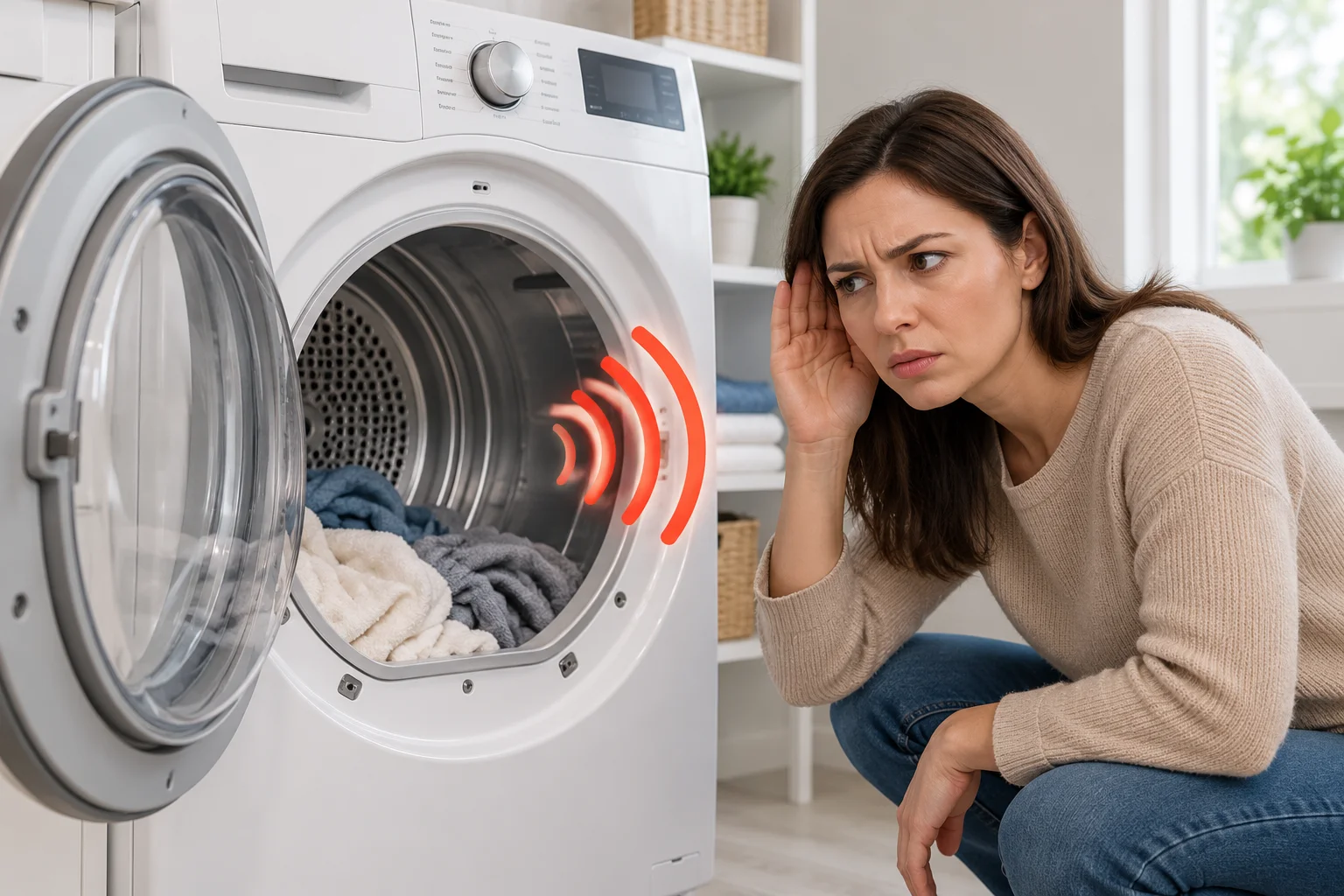
A dryer that suddenly starts squeaking can turn a normal laundry cycle into an irritating experience. Sometimes the noise is a brief squeak when the drum begins turning. Other times, it becomes a continuous high-pitched squeal, grinding sound, or rhythmic noise that grows louder with each load.
Why is your dryer squeaking? Common causes include worn drum support rollers, a failing idler pulley, a damaged drive belt, worn bearings or glides, and installation-related vibration. Loose objects inside the drum can also produce unusual noises.
The sound alone cannot confirm which component has failed. Knowing when the noise occurs, how it changes, and whether the dryer still operates normally can help narrow down the possibilities.
If the squeaking persists or becomes louder, professional dryer repair on Long Island can help identify the underlying problem before additional damage develops.
Why Does a Dryer Start Squeaking?
Most dryers rotate a large drum using a drive motor and belt system. Depending on the model, rollers, bearings, glides, and other support components help the drum turn smoothly.
Over time, moving parts can wear, lose their normal alignment, or develop additional friction. When components rub or rotate unevenly, they may produce squeaking, squealing, scraping, or grinding sounds.
Not every unusual sound means a major mechanical failure. An unbalanced load, uneven installation, or a loose object can sometimes be responsible.
However, a new or progressively worsening squeak deserves attention, especially when accompanied by reduced performance, difficulty turning the drum, or signs of overheating.
7 Common Causes of a Squeaking Dryer
1. Worn or Failing Idler Pulley
The idler pulley helps maintain proper tension on the drive belt as the dryer drum rotates.
When the pulley's bearing wears or its movement becomes restricted, friction can create a high-pitched squeaking or squealing sound. The noise may begin when the cycle starts, continue throughout operation, or become more noticeable as the machine runs.
Possible signs include:
- A sharp squealing sound during drum rotation.
- Noise that repeats or changes with drum speed.
- Squeaking that gradually becomes louder.
- In some cases, problems with belt tension or drum movement.
The location of the idler pulley varies by dryer model, so the apparent direction of a sound does not provide a reliable diagnosis.
A technician can inspect the pulley, belt tension, and related components to determine whether replacement is necessary.
2. Worn Drum Support Rollers
Many dryers use support rollers to carry the weight of the rotating drum.
These rollers must move smoothly. As their surfaces or bearings wear, the drum may rotate less evenly, creating squeaks, squeals, rumbling, or rhythmic thumping.
A damaged roller can also produce different noises depending on the weight of the laundry and the operating conditions.
Common observations include a squeak that repeats as the drum turns, rumbling during operation, or a noise that becomes more noticeable with heavier loads.
Roller wear is one possible explanation for a dryer that starts quietly and becomes noisy later in the cycle. However, a changing sound does not automatically identify a defective roller.
Because roller inspection generally requires opening the appliance, internal repairs are best handled by a qualified technician.
3. Worn, Loose, or Damaged Drive Belt
The drive belt transfers power from the motor to the drum.
Over time, a belt can become worn, frayed, stretched, or damaged. Depending on the design and condition of the belt system, this may contribute to squeaking or squealing noises during operation.
A severely damaged or broken belt may also prevent the drum from turning.
The exact symptoms depend on how the belt, motor pulley, and idler system interact. A squeak does not necessarily mean that the belt itself needs replacement.
Technical Appliance Service LLC has completed a documented dryer drive belt replacement in Westbury, NY. This type of repair involves addressing a specific mechanical component, but other noisy dryers may require entirely different repairs.
If the motor can be heard but the drum does not rotate, stop using the dryer and arrange an inspection rather than repeatedly starting the appliance.
4. Worn Drum Bearings or Glides
Some dryers rely on a rear drum bearing, front drum glides, or similar supports to keep the rotating drum properly positioned.
When these components wear, increased friction can produce squeaking, rubbing, scraping, or grinding sounds.
A worn drum glide may allow the rotating drum to make unwanted contact with adjacent surfaces. A deteriorated bearing can also affect smooth movement.
These problems may develop gradually, beginning with intermittent squeaking before becoming more noticeable.
Not every dryer uses the same support arrangement. Some models have rollers, while others rely on different bearing or glide configurations.
Identifying the correct component requires inspecting the specific appliance rather than assuming that every dryer has the same internal parts.
5. Uneven Installation or an Unbalanced Laundry Load
A dryer does not always squeak because a part has failed.
If the appliance is not level or its feet do not make proper contact with the floor, vibration can cause the cabinet or adjacent surfaces to produce unusual noises.
A heavy or uneven load may also affect how the drum moves during operation.
For example, one large blanket or several heavy items can collect on one side of the drum and create repeated impacts or vibration.
Before assuming there is a mechanical problem, check whether the dryer is stable and whether the laundry is distributed appropriately.
Follow the manufacturer's loading recommendations, and avoid exceeding the appliance's rated capacity.
If the dryer is gas-powered or difficult to access, do not move it in a way that could strain the gas connection, electrical cord, or exhaust duct.
6. Loose Objects, Debris, or Lint Buildup
Coins, buttons, zipper pulls, and other small objects can produce clicking, rattling, or scraping noises inside a dryer.
Some objects may become trapped near the drum opening or around accessible seams.
Lint buildup in certain internal areas may also interfere with moving components, although the presence of lint does not automatically establish the cause of a squeak.
For a safe initial check:
- Turn the dryer off and disconnect power before inspecting accessible areas.
- Remove clothing and check the drum for loose objects.
- Inspect the visible drum edges without inserting tools into hidden spaces.
- Clean the removable lint screen according to the manufacturer's instructions.
- Avoid reaching into internal mechanical compartments.
If an object appears trapped behind a panel or inside a component housing, arrange professional assistance rather than dismantling the dryer.
7. Motor or Blower Wheel Problems
The drive motor rotates the drum through the belt system, while the blower helps move air through the dryer.
A motor bearing problem or damaged blower wheel can sometimes produce squealing, grinding, rubbing, or other unusual noises.
These sounds may resemble problems involving drum rollers or the idler pulley.
A blower wheel may also become noisy if it is damaged, loose, or obstructed by an object.
Motor-related issues can be more complex to diagnose because similar symptoms may originate from several connected components.
A technician may need to inspect the motor, blower assembly, drive system, and other parts before determining the appropriate repair.
What Does the Type of Dryer Noise Tell You?
The sound pattern can offer useful clues, but it should be treated as an observation rather than a confirmed diagnosis.
High-Pitched Squealing or Screeching
A sharp, continuous squeal may involve friction in the idler pulley, drum supports, belt system, or motor bearings.
If the sound is becoming louder or is accompanied by difficulty rotating the drum, stop operating the appliance and arrange an inspection.
Squeaking Only When the Dryer Starts
A dryer that squeaks briefly at startup may have a component that moves differently when cold or initially under load.
Potential explanations include pulley or bearing wear, temporary roller-related noise, or another mechanical condition.
If the sound disappears quickly and does not return, record the pattern and consult the manufacturer's guidance. If it continues across multiple cycles or becomes louder, professional inspection is appropriate.
Grinding or Scraping While the Drum Turns
Grinding or metal-like scraping can indicate unwanted contact, worn supports, a trapped object, or another mechanical fault.
Because continued rotation may increase component damage, do not continue running a dryer that produces severe grinding or scraping sounds.
Thumping or Rumbling
Rhythmic thumping may involve drum support rollers, uneven loads, or objects moving inside the drum.
Some dryers may also produce temporary roller-related thumping after a long period without use. However, persistent or worsening noise should be investigated.
A completed dryer making noise repair in East Hampton, NY is one example of our residential work involving an unusual dryer sound. Each appliance still requires its own diagnosis because different mechanical problems can produce similar noises.
Safe Checks Before Scheduling Dryer Repair
Homeowners can perform several basic observations without opening electrical panels or accessing internal moving components.
Check the Laundry and Drum
Switch the dryer off and allow the drum to stop completely. Remove the laundry and inspect the accessible interior for coins, buttons, or other foreign objects.
Check whether heavy or bulky items were distributed unevenly.
If the drum contains a trapped object that cannot be safely removed from the accessible interior, do not force it out.
Check That the Dryer Is Stable
Make sure the appliance sits securely and does not rock noticeably during normal use.
If the dryer is visibly unlevel, follow the manufacturer's installation instructions. Do not attempt adjustments that require disconnecting or stretching gas, power, or exhaust connections.
Clean the Lint Screen
Remove accumulated lint from the accessible lint screen following the appliance manufacturer's instructions.
A clean lint screen helps maintain normal airflow, although it will not repair a worn pulley, roller, or bearing.
If the dryer also takes unusually long to dry clothes, airflow restrictions may be a separate issue that needs investigation.
Notice When the Sound Happens
If there are no warning signs requiring immediate shutdown, record the noise pattern during ordinary use without removing protective panels.
Useful observations include whether the squeak occurs:
- Only when the dryer starts.
- Throughout the entire cycle.
- When the drum contains a heavier load.
- Together with vibration or reduced drum movement.
- Alongside poor drying performance.
Avoid repeatedly running the appliance just to reproduce an abnormal sound.
Check the User Manual
Different dryer models use different drum supports, motor arrangements, and diagnostic procedures.
The manufacturer's manual may describe expected operating sounds, loading guidelines, and approved maintenance steps.
Do not spray WD-40, household oil, or another lubricant into the dryer. Improper lubricants can create safety risks and may damage components. Internal lubrication or replacement should follow manufacturer-specific instructions and appropriate safety procedures.
When Should You Stop Using a Squeaking Dryer?
A mild, temporary sound may have a simple explanation, but certain symptoms require immediate attention.
Stop using the dryer if:
- The squeak becomes a loud, continuous screech or grinding sound.
- The drum stops rotating or struggles to turn.
- The appliance produces smoke, sparks, or a burning odor.
- The cabinet becomes unusually hot.
- The dryer repeatedly trips a circuit breaker.
- The machine vibrates severely or appears mechanically unstable.
A squeaking sound combined with a burning smell is particularly concerning because overheating, friction, and electrical problems can present safety risks.
Our guide to a dryer that smells like burning explains warning signs that should not be ignored.
If there is smoke, a suspected gas leak, or another immediate hazard, stop using the appliance, leave the area when necessary, and contact the appropriate emergency service.
How Do Technicians Diagnose a Squeaking Dryer?
Professional diagnosis involves more than listening to the noise and guessing which part has failed.
The technician begins by reviewing the reported symptoms, appliance model, operating history, and conditions under which the sound occurs.
Depending on the dryer and the suspected problem, the inspection may include examining drum supports, the belt and tensioning system, relevant motor components, and other mechanical assemblies.
The objective is to identify the source of the noise and determine whether a component should be repaired or replaced.
For example, replacing a drive belt may not solve a noise caused by a worn support roller. Similarly, a pulley replacement would not address an object trapped near the drum.
Technical Appliance Service LLC provides diagnosis and residential dryer repair for homeowners across Long Island. Our $90 diagnostic service fee is waived when we complete the repair.
The technician explains the recommended repair and its price before work begins.
Is It Better to Repair or Replace a Squeaking Dryer?
A squeaking dryer does not automatically need to be replaced.
If the problem involves a replaceable pulley, roller, belt, or another serviceable component, repairing the appliance may be a practical option.
However, the decision depends on several factors, including the dryer's age, overall condition, model, previous repairs, availability of compatible parts, and estimated cost.
A relatively straightforward mechanical repair may make more sense on an otherwise reliable dryer. Multiple major failures on an older appliance may change the calculation.
The best approach is to diagnose the noise first, obtain a clear repair estimate, and compare that estimate with the condition and expected usefulness of the appliance.
Frequently Asked Questions
Is It Safe to Use a Dryer That Is Squeaking?
A brief noise does not always indicate a serious fault, but persistent or worsening squeaking should not be ignored. Stop using the dryer if it produces loud grinding, excessive heat, smoke, a burning smell, or problems with drum rotation.
Why Does My Dryer Squeak Only When It Starts?
Startup squeaking can involve rollers, bearings, an idler pulley, or other mechanical components that behave differently during initial rotation. The sound pattern alone cannot confirm which part is responsible.
What Causes a High-Pitched Squealing Sound in a Dryer?
A high-pitched squeal may result from a worn idler pulley, drum support components, a damaged belt system, or motor-related wear. A technician can inspect the relevant parts to determine the cause.
Can a Worn Dryer Belt Cause Squeaking?
Yes. A worn, loose, or damaged drive belt can contribute to squeaking or squealing in some dryer models. However, similar sounds may come from pulleys, rollers, bearings, or other components.
Can I Use WD-40 to Stop My Dryer From Squeaking?
No. Do not apply WD-40 or other household lubricants inside the dryer. Improper lubrication can create safety risks. Internal components should be serviced according to manufacturer recommendations.
How Much Does It Cost to Diagnose a Squeaking Dryer?
Technical Appliance Service LLC charges a standard $90 diagnostic service fee, which is waived when we complete the repair. The total repair cost depends on the diagnosed problem, necessary parts, and labor.
Professional Dryer Repair on Long Island
A squeaking dryer may need a simple correction or a component replacement, but identifying the actual cause is the first step toward an effective repair.
Technical Appliance Service LLC provides residential dryer repair throughout Nassau County and selected Suffolk County communities. Our team works with major household appliance brands, including Samsung, Whirlpool, LG, Bosch, and Frigidaire.
We serve homeowners throughout Nassau County and within our confirmed Suffolk County service areas. Appointments are available daily from 9:00 AM to 8:00 PM, and same-day service may be possible depending on technician availability, location, and required parts.
If your dryer is making unusual sounds, you can schedule dryer repair to discuss the symptoms and available appointment options.