
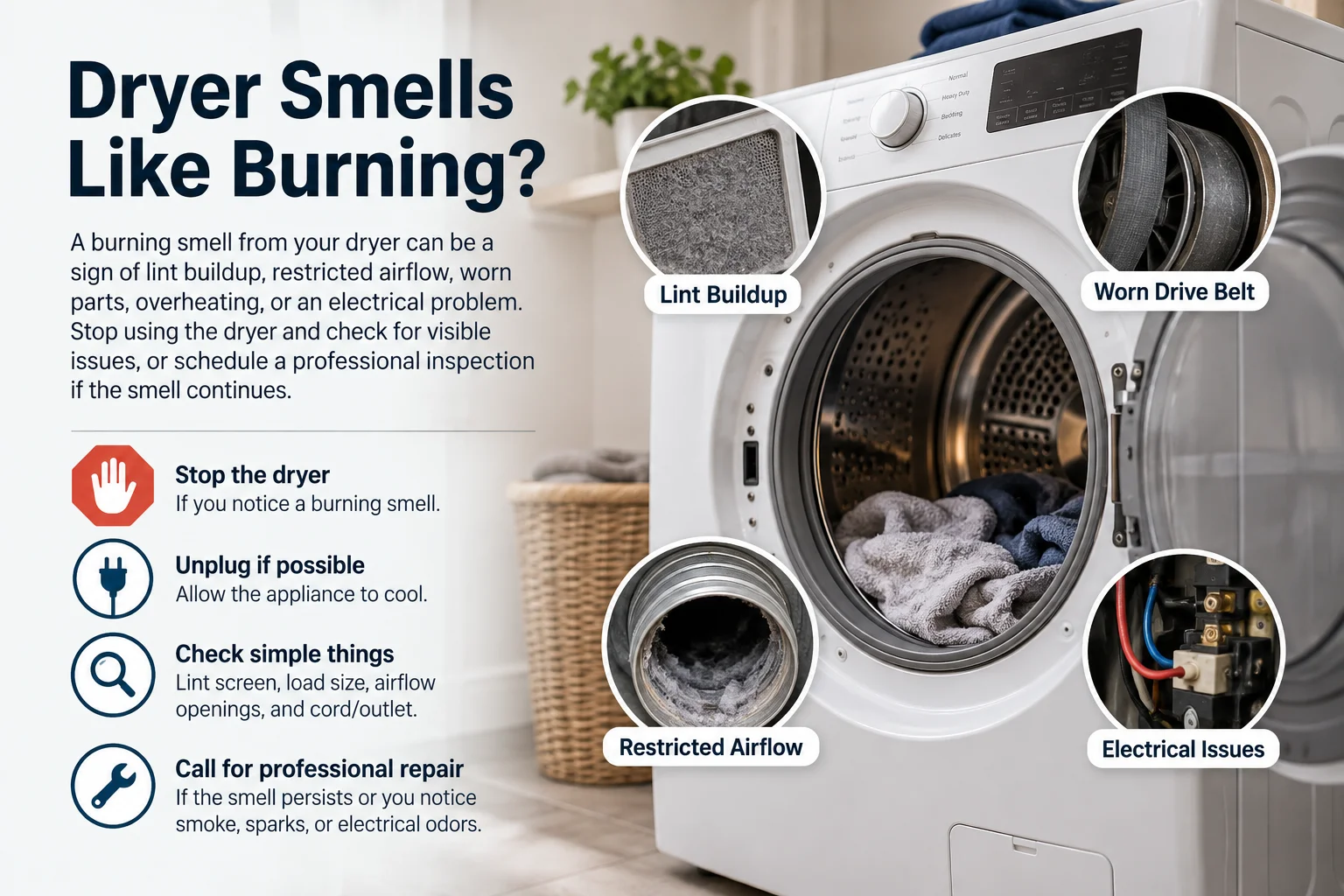
Common causes, warning signs, safe checks, and when to schedule dryer repair.
If your dryer smells like burning, stop the cycle before trying to determine where the odor is coming from. A burning smell can sometimes be related to lint, restricted airflow, or an overloaded dryer, but it can also point to a worn moving part, overheating component, or electrical problem.
The smell alone cannot tell you exactly which part has failed. However, it can be an important warning that the dryer should not continue running until the obvious safe-to-check causes have been ruled out.
If you notice smoke, sparks, a strong hot-plastic or electrical odor, unusual overheating, repeated breaker trips, or a smell that quickly becomes stronger, stop using the appliance. Do not continue running the dryer simply to see whether the odor disappears.
What to Do First if Your Dryer Smells Like Burning
When you first notice a burning smell, stop the drying cycle and allow the appliance to cool. If it is safe and accessible to do so, unplug the dryer before inspecting anything around it.
You do not need to dismantle the appliance to perform the first basic checks. Look at the lint screen, check whether the load is unusually large, make sure accessible airflow openings are not obviously blocked, and visually inspect the power cord and outlet area for obvious damage.
Stop Using the Dryer If You Notice:
- Visible smoke or sparks
- A strong electrical or melting-plastic smell
- Unusual or excessive heat
- Repeated breaker trips
- A burning odor that becomes stronger or repeatedly returns
- Visible damage around the cord or outlet
Do not remove electrical panels, test live wiring, bypass safety devices, dismantle the motor, or disassemble gas connections as part of DIY troubleshooting. If the source of the smell is not clear after basic, non-invasive checks, leave the dryer off until it can be properly inspected.
Why Does My Dryer Smell Like It's Burning?
Homeowners asking why does my dryer smell like it's burning are usually dealing with one of several broad categories of problems rather than one single failure.
Lint or debris may be exposed to excessive heat. Airflow may be restricted. A belt or another moving component may be creating friction. A motor-related component may be overheating. In other cases, the odor may be connected to the heating system or an electrical problem.
The type of smell can provide useful context, but it should not be treated as a diagnosis by itself.
Lint or Debris Buildup
Lint is a normal byproduct of drying clothes, which is why checking and cleaning the lint screen regularly is important. If lint or other debris accumulates where heat is present, the dryer may produce a burnt or unusually hot smell.
A dirty lint screen can also interfere with normal airflow through the appliance. When heat is not being managed normally, the dryer can operate hotter than expected.
If your dryer has started to smell burnt, allow it to cool and inspect the lint screen. Cleaning an accessible lint screen is a reasonable homeowner check, but reaching into internal dryer components or dismantling the appliance is not. If the smell returns after accessible areas have been checked, another source may need to be diagnosed.
Restricted Airflow
A dryer depends on proper airflow while operating. When airflow becomes restricted, excessive heat can develop within the drying system.
Restricted airflow is only one possible explanation for a burning odor. Mechanical, heating-system, or electrical problems can create similar symptoms, so the exact source may require inspection.
Check only areas that are normally accessible to the homeowner and follow the dryer manufacturer's instructions. If you cannot identify an obvious obstruction without taking the appliance apart, stop there rather than attempting to access internal systems yourself.
A Worn or Slipping Drive Belt
If the dryer smells like burning rubber, one possible source is a moving component such as the drive belt.
A belt that is worn, slipping, or operating abnormally may create friction and an odor that resembles hot or burning rubber. However, a rubber-like smell does not prove that the belt has failed. Other materials and components can produce similar odors when overheated.
Because confirming a belt problem normally requires access to internal dryer components, this should not be diagnosed by smell alone. If a burning-rubber odor persists or repeatedly appears during operation, stop using the dryer and have the source checked.
Motor or Moving Parts Overheating
The dryer contains several moving systems that operate while the drum is turning. If a motor or another moving component begins operating under abnormal resistance or friction, excessive heat may develop.
You might notice a hot mechanical smell together with changes in the way the dryer sounds or operates, but those symptoms still do not identify one particular failed part. If the odor appears to come from inside the appliance rather than from lint or another easily accessible area, the problem may require professional appliance repair service rather than further homeowner troubleshooting.
Electrical or Heating-System Problems
A hot-plastic or electrical-type odor deserves particular caution.
Electrical connections, wiring, heating-system components, and other internal parts can all potentially be associated with abnormal heat. The exact cause cannot be determined from smell alone.
If the dryer produces a strong electrical odor, repeatedly trips a breaker, shows visible damage around the power connection, or produces smoke or sparks, stop using it. Do not open electrical panels or attempt to test wiring while the appliance is energized.
What Does the Burning Smell Seem Like?
How you describe the odor can help organize the possible causes, although it should never be used as proof that one specific component has failed.
| What You Notice | Possible Category | Safest Next Step |
| Burnt or lint-like odor | Heat, lint, or airflow-related possibility | Stop the dryer and inspect only safe, accessible areas. |
| Burning-rubber smell | Possible belt or other moving-component issue | Stop using the dryer and arrange diagnosis if the odor persists or returns. |
| Hot plastic or electrical smell | Possible electrical or heating-system issue | Stop using the appliance and do not continue testing it. |
| Smoke | Potential active safety hazard | Stop use immediately and treat the situation as a safety issue. |
A smell description is useful information to give a technician, but several different conditions may smell similar once components become hot.
Is It Safe to Keep Using a Dryer That Smells Like Burning?
A dryer with an unexplained burning smell should not simply be allowed to continue running.
If you noticed the odor once and found an obvious safe-to-correct issue such as excessive lint on the lint screen or an overloaded drum, follow the manufacturer's operating instructions before using the appliance again. However, if the smell remains, comes back, becomes stronger, or is accompanied by unusual heat, smoke, sparks, breaker trips, or electrical odors, continued operation is not appropriate.
Do not use another drying cycle as a test to determine whether a serious smell will disappear on its own. The important distinction is between simple checks that can be made without opening the dryer and symptoms that require the appliance to be inspected internally.
What Can You Safely Check Yourself?
There are several things a homeowner can look at before arranging service, provided they can be checked without dismantling the appliance.
Start by stopping the dryer and unplugging it when it is safe to do so. Inspect and clean the lint screen. Think about whether the dryer was overloaded when the odor appeared. Check accessible airflow openings for an obvious blockage and visually inspect the cord and outlet area for damage.
The manufacturer's manual may also contain model-specific operating and safety instructions that should take priority over generic troubleshooting advice.
A homeowner inspection should not turn into electrical or mechanical disassembly. Avoid removing panels, testing energized components, bypassing thermostats or safety switches, taking apart motors, or disconnecting gas-related components. If the cause is not visible through basic checks, further diagnosis may require access to parts that are not intended for routine homeowner inspection. Problems involving internal components are also common in the types of residential appliance repair work handled across Long Island.
When to Call for Dryer Repair
Professional inspection becomes appropriate when the burning smell persists after basic accessible checks, returns whenever the dryer operates, or appears to come from inside the appliance.
You should also stop troubleshooting yourself when the odor resembles hot plastic or an electrical burn, the machine becomes unusually hot, the breaker repeatedly trips, the dryer produces smoke or sparks, or you suspect a belt, motor, heating-system, or internal electrical problem.
Technical Appliance Service provides residential dryer repair on Long Island, serving homeowners across Nassau County and selected Suffolk County communities.
The goal of an inspection is to identify the actual source of the problem rather than replace a component based only on the type of odor.
How to Reduce the Risk of Dryer Overheating
Good routine dryer use can reduce some of the conditions associated with overheating.
Keep the lint screen clean and follow the cleaning interval recommended by the dryer manufacturer. Avoid consistently overloading the drum, because the dryer needs enough space to move clothes and operate normally.
Pay attention when drying behavior changes. A dryer that suddenly becomes much hotter than usual, develops a new smell, trips a breaker, or begins operating differently should not be ignored.
Accessible airflow areas should also be kept clear, and any maintenance instructions provided for the specific dryer model should be followed. These practices cannot prevent every mechanical or electrical failure, but they can help avoid operating the appliance under unnecessary heat or airflow restriction.
Need Help With a Dryer That Smells Like Burning?
If your dryer continues to produce a burning odor after it has been stopped and the basic safe checks have been completed, avoid continued use until the source can be identified.
Technical Appliance Service provides residential dryer diagnosis and repair across Long Island, including all Nassau County and selected Suffolk County communities. If you need help with another household appliance, you can also explore our appliance repair services.
You can also view our recent appliance repair work to see examples of residential appliance problems our team has worked on across Long Island.
Frequently Asked Questions
Why does my dryer smell like it's burning?
A burning smell can be associated with several possible categories, including lint or debris exposed to heat, restricted airflow, friction from a moving component, motor overheating, or an electrical or heating-system problem. The odor alone cannot confirm which component is responsible.
Is it normal for a dryer to smell like burning?
An unexplained burning smell should not be treated as normal. Stop the dryer and check only safe, accessible areas such as the lint screen and obvious airflow openings. If the smell persists, returns, or is accompanied by smoke, unusual heat, electrical odors, or breaker trips, leave the appliance off until it can be inspected.
Why does my dryer smell like burning rubber?
A worn or slipping drive belt is one possible source when a dryer smells like burning rubber, but other moving or overheated components may produce a similar odor. If the smell persists or returns, stop using the dryer rather than trying to diagnose the component from the smell alone.
Why does a new dryer smell like burning?
A new dryer should still be treated cautiously if it produces a strong or persistent burning odor. Do not assume the smell is harmless simply because the appliance is new. Check the manufacturer's instructions for your specific model, and stop using the dryer if the odor continues, becomes stronger, or resembles melting plastic or an electrical burn.
What should I do if my dryer starts smoking?
Stop the dryer immediately and treat smoke as a safety issue. Do not continue running the machine to identify where the smoke is coming from. If it can be done safely, disconnect the appliance from power and avoid dismantling or testing internal components yourself.
Why do my clothes smell burnt after drying?
A burnt smell on clothing may indicate that excessive heat, lint, airflow restriction, or another internal dryer condition needs attention. Check the lint screen and other safe, accessible areas first. If the dryer itself also smells burnt, or the odor remains after the basic safe checks have been completed, avoid continued use until the appliance can be inspected.