
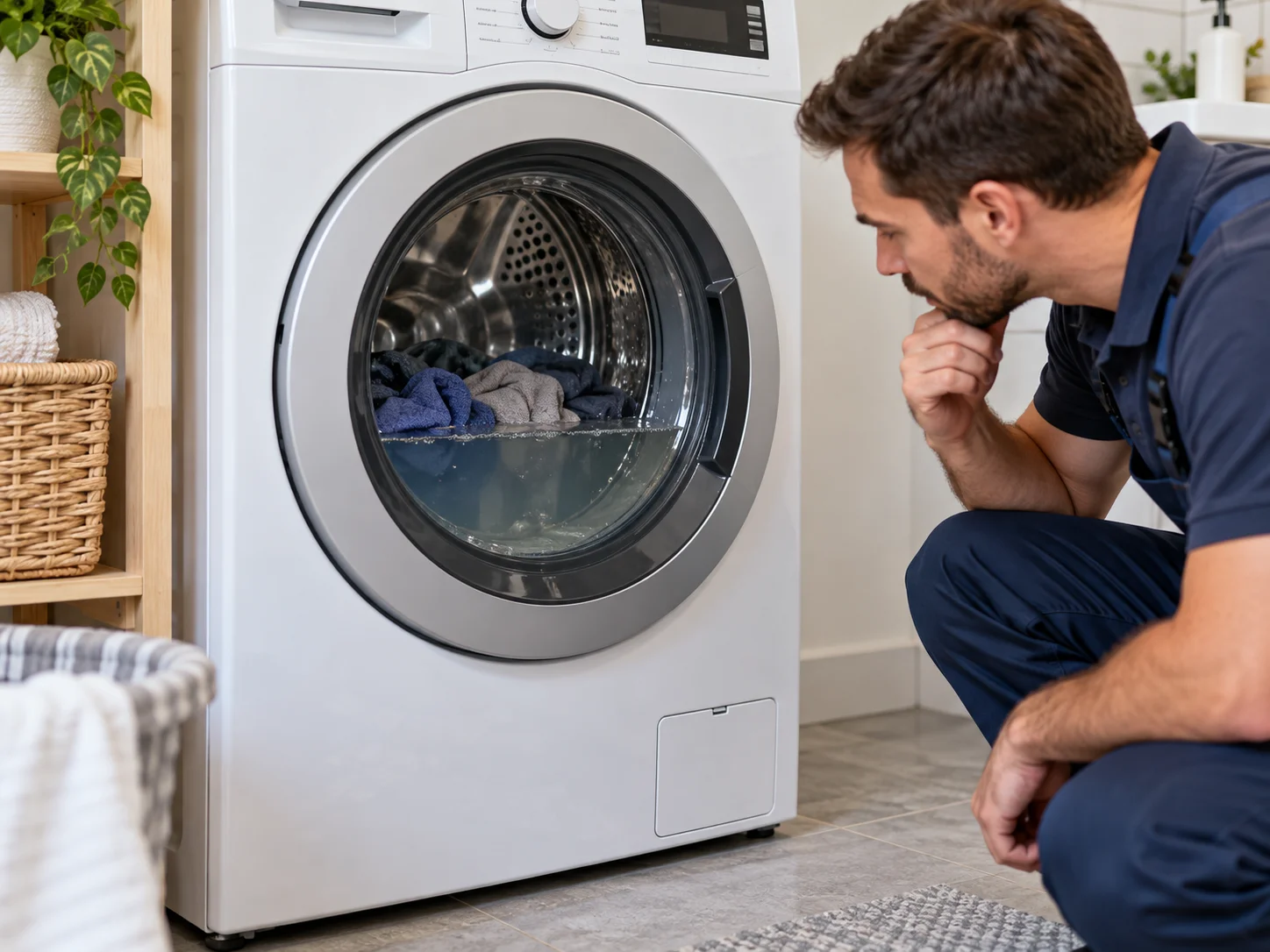
A washing machine not draining after a cycle may have a clogged filter, a kinked drain hose, a blocked household drain, or a problem with its drain pump. Sometimes a cycle-related or door-lock issue interrupts drainage. Because similar symptoms can have different causes, start with safe observations before assuming a component has failed.
Washing Machine Not Draining? Check These Signs First
The most obvious sign is standing water in the washing machine after the cycle should have finished. Other signs include unusually wet clothes, a cycle pausing before spin, or a drain-related error.
Listen for changes, too. A washer that hums while attempting to drain may have an obstruction or a pump issue, while a machine that stops without attempting to drain may have a different fault. Neither proves pump failure. Check any error code in your model’s manual.
Common Reasons a Washing Machine Won't Drain
Clogged Drain Pump Filter
On models with a serviceable drain filter, lint, coins, hairpins, and other small items can collect in the filter area. Debris may slow or stop drainage. Check your model’s manual; not every machine has a user-accessible filter.
Kinked or Blocked Drain Hose
The hose carrying water away from the washer can become bent, pinched behind the appliance, or clogged internally. Incorrect hose positioning may also affect drainage. A clogged washing machine drain hose may mimic pump failure. Follow the manufacturer’s installation guidance rather than guessing the correct hose height.
Drain Pump Obstruction or Failure
The washer drain pump moves used water out of the machine. Small objects can interfere with it, or the pump itself may malfunction. Unusual sounds or a drain error offer clues, but internal testing and replacement decisions require a trained technician.
Blocked Household Drain
Sometimes the washer is sending water out, but the home's standpipe or drain cannot accept it properly. Backup near the standpipe suggests a plumbing restriction. Stop the washer if water overflows and arrange an inspection.
Cycle Settings, Load Balance, or Excess Suds
If clothes finish unusually wet, check whether the selected cycle used a reduced spin speed. Bulky or uneven loads and excessive detergent can interfere with normal cycle completion on some machines. Wet clothes alone do not prove a drainage failure.
Door Lock, Lid Switch, or Control Issues
Some washers will pause or stop a cycle if their door or lid safety system does not register the correct condition. Control faults can look similar. Never bypass a switch or force a locked door.
Safe Checks Before Calling for Washer Repair
If your washer is not draining, focus on checks that do not require dismantling the appliance:
- Stop the cycle if water is leaking or overflowing. Keep clear of standing water near outlets or electrical connections. Disconnect power only when it is safe to do so.
- Look at the visible drain hose. Check for obvious kinks or compression without moving a heavy washer or disconnecting plumbing.
- Read the error message. Use the owner's manual to identify what the displayed code means for that particular model.
- Check the filter instructions. Only inspect a user-accessible filter if the manual permits it. Unplug the washer first, if safe, and be prepared for retained water that may be hot or spill onto the floor.
- Stop if the issue continues. Do not open internal panels, handle electrical parts, or attempt to bypass the door or lid lock.
If there is a large amount of water inside the drum, do not force the door open or remove a filter without understanding the manufacturer's drainage procedure. Avoid flooding and electrical hazards.
Front Load vs. Top Load Washer Drainage Problems
A front load washer not draining may have a serviceable pump filter behind an exterior access panel, depending on the model. Some models lack that access, and door locks may limit troubleshooting.
With a top load washer not draining, the lid switch or lock may be particularly relevant when a cycle fails to continue. Filter access and drain systems vary, so follow model-specific instructions.
Can a Washer That Won't Drain Also Leak Water?
Yes. A washer can have drainage trouble and a leak at the same time, but the two symptoms do not automatically have the same cause. Water might escape from a loose or damaged connection, while a restriction in the household drain can lead to backup or overflow. A separate seal or hose problem can also cause leaking.
Note where and when water appears to help distinguish the possible causes. If water is reaching electrical components or spreading across the floor, stop using the washer. Drainage and leaking problems can occur together, as shown by a recent washer leaking and not draining service call in Massapequa.
When Should You Call a Washing Machine Repair Technician?
Consider professional service when water repeatedly remains in the drum, a drain error returns, or the washer continues stopping before the spin cycle. A technician should also inspect suspected internal pump or control faults, persistent leaks, and any situation involving electrical safety concerns.
A washing machine repair service can evaluate the drain path, pump operation, and other systems to identify the actual cause instead of replacing parts based on symptoms alone.
Washing Machine Repair Across Long Island
Technical Appliance Service LLC provides residential appliance repair services across Nassau County and selected communities in Suffolk County. Diagnosis can distinguish hose, pump, drainage, and control problems.
Homeowners looking for service coverage can review the company's Nassau County appliance repair services. For persistent washing machine drainage problems, contact Technical Appliance Service LLC to discuss an inspection.
Frequently Asked Questions
Why is there still water in my washing machine after the cycle?
Water may remain because the drain filter or hose is obstructed, the pump is not working properly, or the cycle stopped before drainage finished. A blocked household drain can also be involved. The visible symptom alone is not enough to identify the failed part.
Can a clogged filter stop a washing machine from draining?
Yes. On machines equipped with a drain filter, trapped lint or small objects can restrict water flow. However, some washers have no user-accessible filter. Check the owner's manual before opening the filter area, and take precautions against hot or spilled water.
Why is my washing machine not draining or spinning?
A washing machine not draining or spinning may have a drainage restriction, an interrupted cycle, a load-balance problem, or a door or lid safety-system issue. Whether water remains in the drum can help distinguish a drainage problem from a spin-only issue.
How can I tell if my washer drain pump is bad?
A recurring drain error, unusual pump noises, or water left in the drum may point toward a pump problem, but these signs can also come from blockages elsewhere. A technician can inspect and test the relevant parts before recommending repair or replacement.
Can I use my washing machine if it is not draining properly?
It is better to stop using it until the cause is understood. Repeated cycles may leave additional water trapped or worsen an existing leak. If water is overflowing or creating an electrical hazard, stop the machine and seek qualified help rather than continuing to troubleshoot.