
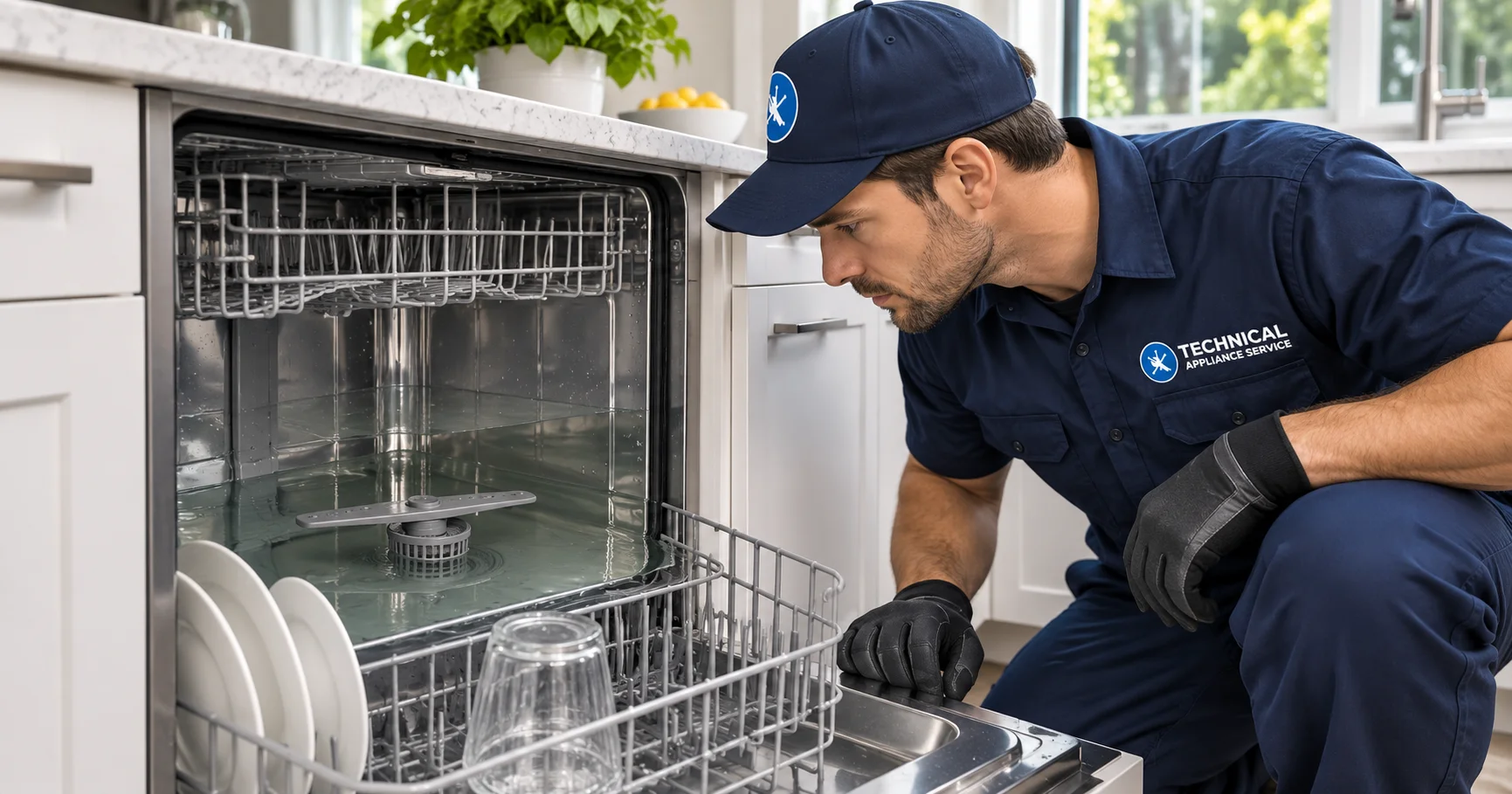
If your dishwasher is not draining, the cause may be a clogged filter, a kinked or obstructed drain hose, a restricted sink or garbage disposal connection, a drain pump problem, or another internal fault. An interrupted wash cycle can also leave water behind because the drain stage never finished. However, a small amount of water in a recessed filter or sump area is normal on some models. Check where the water remains, when it appears, and whether the cycle completed. This guide covers seven possible causes, safe checks, and when to request professional diagnosis.
Dishwasher Not Draining? Check What the Water Is Doing
The location and timing of standing water can help you decide what to check first. Use this table as a starting point, not as proof that a particular component has failed.
| What You Notice | Possible Explanation | Safe First Step |
|---|---|---|
| A small amount of water is visible only in the recessed sump area | Normal residual water on certain dishwasher models | Consult the owner's manual and compare with normal operation |
| Water remains across the tub floor after a completed cycle | Possible drainage obstruction or pump issue | Check cycle completion and accessible filter |
| Water remains after the cycle was interrupted | Drain stage may not have completed | Review the model-specific cycle or cancel/drain instructions |
| Dishwasher stopped draining after a new disposal installation | Possible connection or knockout-plug issue | Note installation history; request a qualified inspection |
| Water appears to return after the dishwasher has drained | Possible backflow, connection or check-valve issue | Observe when the water returns and seek diagnosis |
| Dishwasher and kitchen sink both drain slowly | Possible shared sink/drain-path problem | Contact an appropriate plumbing professional if household drainage is affected |
Similar standing water can have different causes. Also, water not draining from a dishwasher differs from poor cleaning after a normal drain. If the tub empties normally but the dishes still have food or grease on them, see our guide to why your dishwasher is not cleaning dishes. And if water ends up on the floor or in the sink cabinet instead of staying in the tub, read why your dishwasher is leaking.
Is Some Water in the Bottom of a Dishwasher Normal?
On certain dishwashers, a small amount of water remains in the recessed sump or filter area after a cycle. This can be part of the appliance's normal design. It is not the same as water spreading across the visible tub floor or covering the lower rack area after the drain stage is complete.
Look at where the water sits, not a universal measurement. Filter housings vary by model; consult your owner's manual for normal operation.
If water is new, higher than usual, or accompanied by an error, note the symptom rather than assuming the drain pump has failed.
What Should You Check First?
Start by confirming whether the selected wash cycle finished. A power interruption, open door, or paused program may leave water behind before the normal drain stage. Check the display for an error code and consult the owner's manual for what it means. Some machines have a cancel/drain function, but the correct controls vary by model.
After the appliance has stopped and cooled, switch it off before inspecting any user-accessible areas. Note whether water is limited to a recessed sump or spread across the tub floor. Check the removable filter only if the manual identifies it as user-serviceable. If the drain hose is visible under the sink, look for obvious kinks or crushing without loosening any connections. Consider whether a garbage disposal or sink plumbing was recently installed or changed.
Stop using the dishwasher if it leaks, smells like burning, has visible electrical damage, or presents another unsafe condition. Do not use chemical drain cleaners or attempt to dismantle energized or fixed components.
7 Reasons Your Dishwasher Is Not Draining Properly
1. The Wash Cycle Did Not Finish
A dishwasher may sound as though it has completed washing even when the cycle was interrupted before the drain stage. A power interruption or paused program can leave water behind without a mechanical fault. Some models drain at several points during a cycle.
Safe check: Review the control display and any recorded error message. Confirm whether the selected program ended normally. If your owner's manual describes a cancel/drain option, follow those exact instructions when it is safe to operate the appliance. Do not use a generic reset or button sequence intended for another model.
Repeated interruptions may need professional diagnosis.
2. The Dishwasher Filter Is Clogged
Food scraps and grease can accumulate around the filter. On some models, a clogged filter or nearby debris restricts water movement. You may notice residue and standing water, although a dirty filter is only one possible explanation for a dishwasher not draining completely.
Safe check: Turn off the appliance and follow the manufacturer's instructions for locating and cleaning a removable filter. If yours is designed to be removed, rinse it as directed and reinstall it securely. Watch for broken glass and sharp objects; do not reach blindly into the sump or remove fixed pump covers.
If cleaning makes no difference, another section of the drain path may need inspection.
3. The Drain Hose Is Kinked or Obstructed
The drain hose carries wastewater from the dishwasher toward the household drainage connection. Crushing, sharp bends, or blockages can slow or stop drainage. A hidden restriction may not be visible externally.
Safe check: If you can see a section of drain hose beneath the kitchen sink without moving the dishwasher, look for obvious pinching or damage. Note recent changes under the sink. Do not loosen clamps, open fittings, or pull out a hardwired appliance.
A technician can inspect the drainage path if the water remains after safe checks.
4. The Garbage Disposal or Sink Drain Connection Is Restricted
Some dishwashers drain through a garbage disposal; others use another approved sink connection. A blockage can stop drainage. If a disposal was newly installed or replaced, an installer may also need to confirm that the dishwasher inlet's knockout plug was removed where applicable.
Safe check: Observe whether the kitchen sink drains normally and think about whether the dishwasher problem began after disposal or plumbing work. Tell the appropriate professional about those changes. Do not dismantle the disposal, remove a knockout plug, or open drain fittings yourself as part of this guide.
If both drain slowly, a qualified plumber may need to inspect shared household plumbing.
5. An Air Gap or Drain-Loop Problem Is Affecting Drainage
Depending on the installation, a dishwasher may use a countertop air gap, high drain loop, or another approved arrangement to reduce wastewater backflow. A blocked air-gap path or incorrectly routed hose can contribute to drainage or backflow problems.
Safe check: Look for a visible air-gap fitting near the sink, if one is installed, and note any recent changes to drain-hose routing. Review the manufacturer's installation guidance for your particular model. Not every installation includes an air gap.
Have suspected connection problems assessed rather than modifying plumbing.
6. The Drain Pump Is Blocked or Not Working Properly
The drain pump moves used wash water out of the dishwasher. Obstruction, malfunction, or a control problem can leave water behind. Standing water, unusual drain-stage noises, or an error are clues, not proof of pump failure.
Safe check: Note whether the dishwasher makes an unusual sound, displays an error, or repeatedly leaves water after a completed cycle. Do not open the pump assembly, touch an impeller, or perform electrical tests. These checks belong to a qualified technician.
During a documented dishwasher drainage repair in Levittown, our technician replaced the drain pump after the homeowner reported that the dishwasher was not draining properly. Not every standing-water complaint requires a replacement pump.
7. A Check Valve, Control or Another Internal Component Is Malfunctioning
Some dishwashers use a check valve or related mechanism to help prevent drained water from flowing back into the tub. A valve, sensor, control, or external drain connection can produce similar symptoms.
Safe next step: Record whether the water never leaves, drains only partly, or returns later. Include any error messages and recent plumbing changes when requesting service. Have a professional distinguish internal faults from drain restrictions before replacing parts.
Why Does Water Come Back Into the Dishwasher After Draining?
Water that reappears after a successful drain is an important clue. It may point toward backflow from a sink or disposal connection, improper drain-hose routing, or a model-specific check-valve problem. This differs from water that never drains.
Notice when the water returns: immediately after the cycle, after someone uses the kitchen sink, or several hours later. Note whether the water looks dirty or the sink drains slowly; these clues can guide diagnosis.
Do not disconnect plumbing or keep running the appliance if water is backing up or leaking.
When Should You Call a Dishwasher Repair Technician?
Consider an inspection if water continues covering the tub floor after a normally completed cycle, the dishwasher repeatedly fails to finish draining, or cleaning a user-serviceable filter has not helped. Unusual mechanical sounds, recurring drain-related error codes, and evidence of an internal component problem are other reasons to seek professional diagnosis.
A technician can assess the drain pump, controls, and discharge system before recommending parts. A backing-up sink may instead need a plumber.
For homeowners dealing with persistent drainage problems, professional dishwasher repair on Long Island is an appropriate next step after the safe checks above. Stop use if there is leakage, a burning smell, or electrical damage.
Frequently Asked Questions
Why is there standing water in the bottom of my dishwasher?
A little water in the recessed sump or filter area may be normal on some models. Water spread across the tub floor after the appliance has completed its drain stage can indicate a problem. Check the owner's manual for what is expected on your dishwasher, and note whether the water is new, increasing, or accompanied by an error code.
Can I force my dishwasher to drain?
Some dishwashers offer a cancel/drain function that can remove water after an interrupted cycle, but the controls and conditions vary. Follow the instructions for your exact model. Do not try a universal reset sequence or repeatedly operate a dishwasher that is leaking or showing an electrical safety concern. If it still does not drain, arrange diagnosis.
Why is my dishwasher not draining even though the filter is clean?
A clean filter does not rule out a kinked drain hose, a restriction at the sink connection, an air-gap issue, a drain pump problem, or a check-valve or control fault. Note whether the cycle completes and whether water leaves and later returns. A technician can determine which part of the drainage system is responsible.
Can a garbage disposal cause a dishwasher not to drain?
Yes, if the dishwasher drains through a disposal connection, a restriction there may affect its ability to discharge water. A newly installed disposal may also have an inlet knockout plug that needs to be checked by a qualified installer. If the sink drains poorly too, consult a plumbing professional. Not every dishwasher is connected to a disposal.
How do I know if my dishwasher drain pump is failing?
Repeated failure to drain, unusual sounds during the drain stage, or relevant error messages may suggest a pump or circulation-path issue. However, a blocked hose, sink connection, or control problem can create similar symptoms. The pump should be diagnosed rather than replaced based on sound or standing water alone; avoid opening it or performing electrical tests yourself.
Is it worth repairing a dishwasher that won't drain?
It depends on the confirmed problem, the machine's age and condition, parts availability, and the repair estimate compared with replacement. A user-serviceable filter issue may require little more than maintenance, while an internal fault needs a proper assessment. A technician's diagnosis and estimate will help you decide without relying on a universal repair-or-replace rule.
Dishwasher Drainage Repair Help for Long Island Homeowners
Technical Appliance Service LLC provides residential dishwasher repair throughout Nassau County and selected Suffolk County communities. Check the Long Island communities we serve before arranging service. Our regular hours are 8:00 AM–7:00 PM daily, and same-day appointments may be available depending on scheduling.
If your dishwasher still holds water after appropriate basic checks, you can schedule a dishwasher repair appointment or call +1 929-585-2342 to describe the issue and request availability.