
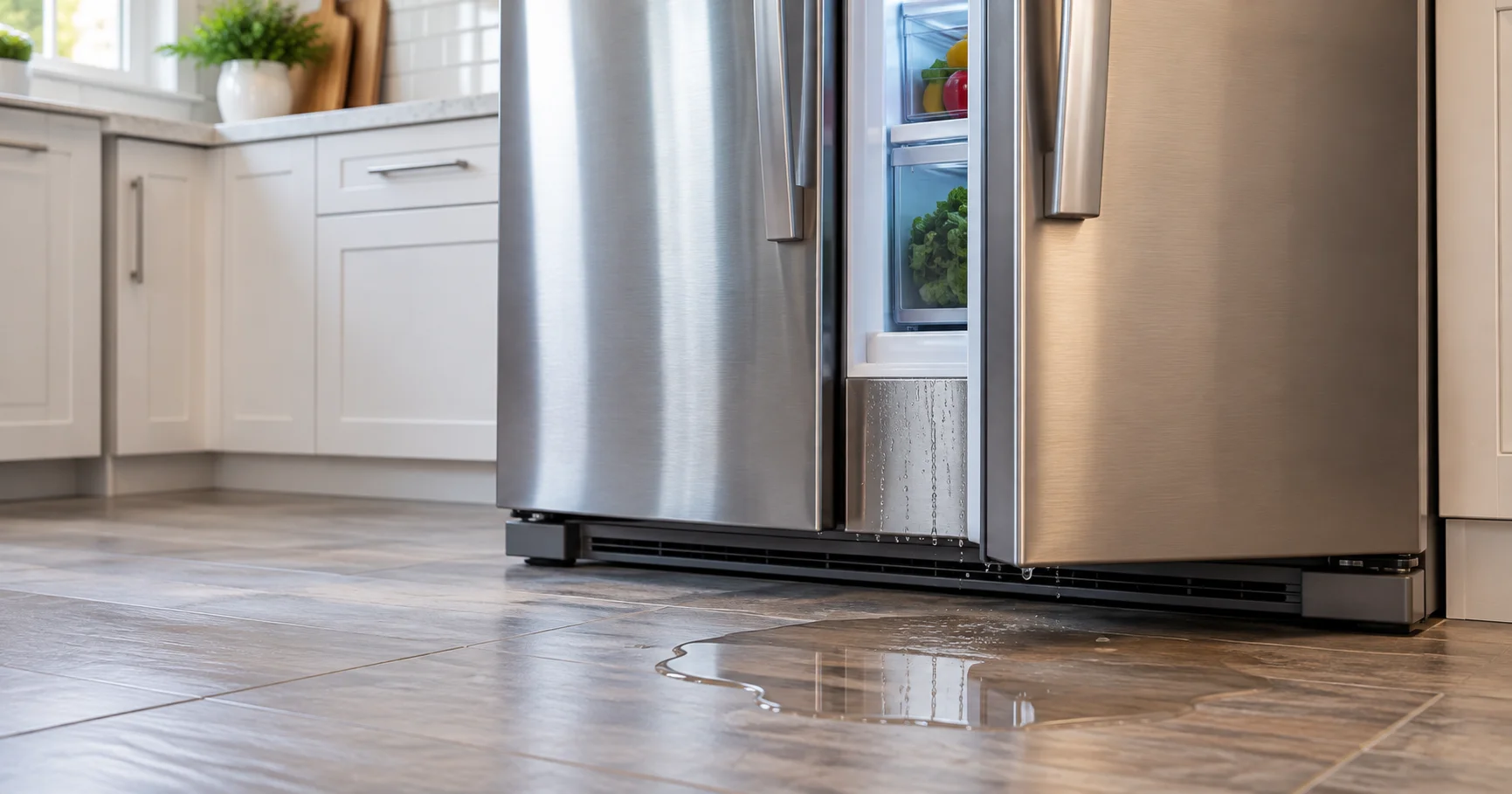
Finding water around or inside your refrigerator can be concerning, especially when you are not sure where it is coming from. A refrigerator leaking water can be connected to several different conditions, ranging from an accessible drain or seal problem to an issue involving the appliance’s water supply system.
Before assuming a specific part has failed, first look at where the water appears. A fridge leaking water from the bottom may have a different cause than water collecting inside the fresh-food compartment or around the dispenser.
Some basic checks can be performed safely at home, but leaks involving internal components, electrical areas or inaccessible water lines should be evaluated by a technician. If you are dealing with an ongoing leak, our refrigerator repair service covers cooling, leaking and other refrigerator performance problems.
First, Find Where the Water Is Coming From
The location of the water can provide useful clues before any repair is considered. Start by checking the floor around the refrigerator, the inside compartments, the area around the water dispenser and the visible space behind the appliance if it can be inspected safely.
Water Under the Refrigerator
If you notice water under the refrigerator or a puddle forming on the kitchen floor, the source may involve the drain system, drain pan or a water connection.
Do not assume the visible puddle identifies the failed component. Water can travel along the appliance or floor before becoming noticeable, so the actual source may be somewhere else.
If the refrigerator is leaking water on the floor repeatedly, wipe up the water to reduce the risk of floor damage and avoid using the appliance if water is reaching electrical components.
Water Inside the Refrigerator
A fridge leaking water inside may leave moisture beneath drawers, on shelves or near the bottom of the fresh-food compartment.
A blocked drain is one possible reason for water collecting inside, but excess condensation, frost-related drainage and other conditions may create similar symptoms. The refrigerator should be checked carefully before determining what repair is needed.
Water Near the Dispenser or Ice Maker
For refrigerators equipped with a water dispenser or ice maker, the leak may be related to the water supply system, filter connection or dispenser area.
Look for visible dripping around the dispenser and check whether the leak appears only after water or ice is used. Avoid disconnecting internal lines or removing sealed panels if the source is not easily accessible.
Water Coming From Behind the Refrigerator
Water behind the refrigerator may be associated with an external water supply connection, drain pan or another component located toward the rear of the appliance.
If you need to move the refrigerator to inspect the area, make sure the appliance can be moved safely without damaging the floor or pulling on the water connection.
Common Reasons a Refrigerator Is Leaking Water
Different refrigerator designs use different components and layouts, so the same symptom does not always have the same cause. The following are several common possibilities when a refrigerator is leaking water.
1. Blocked Defrost Drain
During normal operation, moisture created during the defrost process needs a path to drain away. If that drainage path becomes blocked by ice or debris, water may collect inside the refrigerator or eventually reach the floor.
You may notice moisture near the bottom of the appliance or beneath interior drawers.
A visible and easily accessible area can be inspected, but many refrigerator drain components are located behind panels. Avoid dismantling internal sections unless the manufacturer specifically identifies them as homeowner-accessible.
Blocked or restricted drainage is one of the main conditions covered in refrigerator leak troubleshooting. Pasted text
2. Water Supply Line or Connection Problem
Refrigerators with an ice maker or water dispenser usually have a water supply connection. A damaged, loose or frozen line can potentially result in leaking or interfere with normal water and ice operation.
Check accessible connections for visible moisture, kinks or dripping. If the line disappears behind the appliance or into an internal compartment, further inspection may require professional service.
The competitor article also identifies frozen and damaged water lines as potential refrigerator leak sources. Pasted text Pasted text
3. Excess Frost or Ice Buildup
Heavy frost or ice buildup can interfere with normal drainage and temperature management. As ice melts during a defrost cycle, water may appear inside the appliance if it cannot drain normally.
Check whether there is unusual frost around the freezer interior, vents or back wall. If the refrigerator is also struggling to maintain temperature, the leak and cooling issue may be related symptoms rather than separate problems.
For more information about cooling symptoms, see our guide to common reasons a refrigerator may not be cooling.
The competitor's troubleshooting guide also treats excessive frost buildup as one possible contributor to refrigerator water problems. Pasted text
4. Damaged or Poorly Sealing Door Gasket
The gasket around the refrigerator door helps keep warm household air from continuously entering the appliance.
If the seal is damaged, dirty or no longer closing correctly, additional moisture may enter the refrigerator. That can contribute to condensation and moisture accumulation.
Inspect the gasket for obvious tears, gaps or sections that are no longer sitting properly against the cabinet. Also check that containers or food packages are not preventing the door from closing completely.
A poor door seal and the condensation it can create are also included among the competitor's leak causes. Pasted text
5. Water Dispenser or Filter Connection Issue
If water appears around the dispenser, pay attention to whether the leak happens continuously or primarily after dispensing water.
Air in the line, an improperly installed filter, a damaged connection or another dispenser-system problem may cause dripping. If the refrigerator recently received a new water filter, check that it is installed according to the manufacturer's instructions.
Persistent dispenser leaks may require inspection of parts that are not accessible from outside the appliance. Pasted text
6. High Humidity and Excess Condensation
Warm, humid household air can enter a refrigerator whenever the door is opened. Under some conditions, this can contribute to excess moisture inside the appliance.
Frequent door opening or a poor door seal may make condensation more noticeable. Check that the doors close completely and avoid leaving them open longer than necessary.
If moisture continues to collect despite normal use, another drainage or sealing problem may be involved. High humidity is also included in the competitor's refrigerator leak troubleshooting coverage. Pasted text
7. Damaged or Overflowing Drain Pan
A refrigerator may use a drain pan to collect small amounts of water associated with normal operation so that the moisture can eventually evaporate.
If an accessible drain pan is cracked, damaged or unusually full, water may reach the floor beneath the refrigerator.
Only inspect or remove the pan if it is readily accessible according to the appliance design. If accessing it requires significant disassembly, a technician can inspect the area during service. Pasted text
8. The Refrigerator Is Not Sitting Properly
The position of the refrigerator can sometimes affect how water moves through parts of the drainage system.
Check that the appliance appears stable and has not shifted significantly. If leveling is required, follow the instructions provided for the specific refrigerator model rather than making assumptions about the correct position.
What If the Freezer Is Leaking Water?
A freezer leak may produce many of the same visible symptoms as a refrigerator leak. Water can appear inside the freezer, beneath the refrigerator or on the surrounding floor.
Possible conditions include frost buildup, drainage problems, sealing issues, water-line problems or components involved in the defrost system. The competitor also treats freezer leaking as a related troubleshooting scenario rather than a completely separate issue. Pasted text
If excess ice is visible, avoid using sharp objects or tools to remove it. If the source of the water is unclear or the freezer is also losing temperature, the appliance should be inspected before deciding what repair is needed.
We will also be adding a dedicated guide covering freezer not freezing problems, which can then be linked here once it is published.
Safe Checks You Can Make Before Scheduling Repair
Before requesting service, you can perform a few basic observations without taking the appliance apart.
Confirm that the refrigerator doors close completely and inspect the visible gasket. Look for water around accessible dispenser and water-line connections. Check where the water first appears and whether the leak happens continuously or only after using the dispenser or ice maker. Also look for unusual frost, ice or condensation inside the appliance.
If you notice water close to electrical components, a damaged internal line, a leak behind sealed panels or a problem you cannot safely access, stop troubleshooting and arrange service. A water leak can become more serious when moisture reaches electrical areas. Pasted text
When to Call for Refrigerator Repair
A small amount of condensation and an active water leak are not the same thing. If water continues to return after basic checks, professional diagnosis may be needed to identify the actual source.
You should also consider service when the leak appears to originate behind the refrigerator, around electrical components, from an inaccessible water connection, or from an internal dispenser or ice-maker system.
Technical Appliance Service LLC has handled refrigerator leak problems locally as part of our residential appliance repair work. You can also see our completed Samsung refrigerator leak repair in East Hampton, NY as an example of a local refrigerator leak service case.
The exact repair required depends on the individual appliance. Similar symptoms do not necessarily mean the same component has failed.
Frequently Asked Questions About Refrigerator Water Leaks
Why is my refrigerator leaking water?
A refrigerator may leak water because of a drainage problem, water-line issue, door seal problem, excessive frost or condensation, dispenser-related issue or damaged drain pan. The location of the water can help narrow the possibilities, but the appliance may need to be inspected before the exact cause is confirmed.
Why is there water underneath my refrigerator?
Water beneath the refrigerator may come from the drain system, drain pan, water supply connection or another leak inside the appliance. Because water can travel before reaching the floor, the location of the puddle does not always identify the source.
Why is water pooling inside my refrigerator?
Water inside the refrigerator can be associated with a blocked defrost drain, condensation or another drainage issue. Look at where the water is collecting and whether unusual frost or ice is present.
Can a blocked defrost drain cause a refrigerator to leak?
Yes. If water produced during the defrost process cannot drain normally, it can collect inside the appliance and may eventually reach the floor. The competitor article specifically identifies blocked defrost drainage as a common refrigerator leak cause. Pasted text
Can I fix a leaking refrigerator myself?
Some basic checks can be performed without disassembling the refrigerator, such as inspecting the door seal, checking accessible water connections and looking for visible moisture or frost. Internal electrical, refrigerant, water-valve and sealed-component work should be left to an appliance professional.
When should I call a technician for a refrigerator leak?
Schedule refrigerator repair if the leak continues after basic checks, if its source cannot be identified safely, or if water is appearing near electrical components or internal parts. Persistent dispenser, ice-maker and inaccessible water-line problems may also require professional diagnosis. Pasted text
Need Refrigerator Repair?
If your refrigerator is leaking water or showing another performance problem, the source should be identified before deciding which repair is needed.
You can request appliance repair service through our contact page or call 929-585-2342 to schedule residential refrigerator service.