
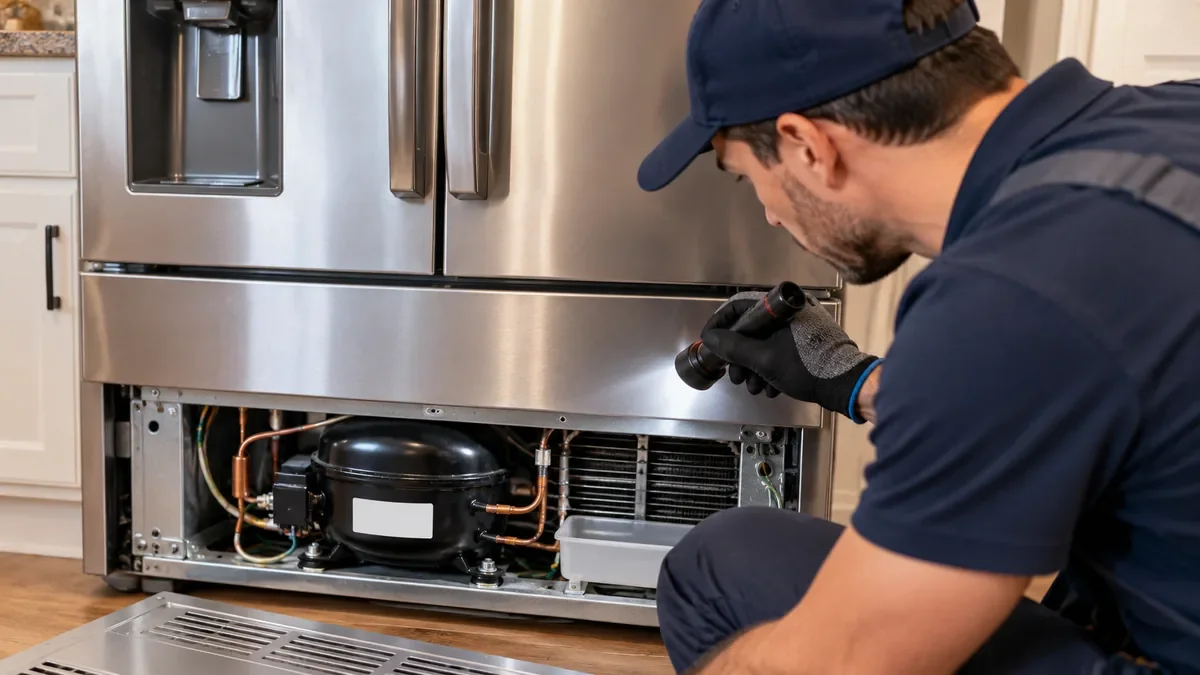
Why is my refrigerator making noise? In many cases, the sound comes from normal operation, such as the compressor running, fans circulating air, refrigerant moving through the system, or an ice maker completing a cycle. A gentle hum, brief click, or occasional popping sound may be completely normal.
However, a new, unusually loud, persistent, or worsening noise may indicate something that needs attention, especially if the refrigerator is also struggling to cool.
The sound alone cannot identify a failed component. Understanding when the noise occurs and how the appliance is performing can help you decide whether a simple check or professional inspection is appropriate.
Is It Normal for a Refrigerator to Make Noise?
Yes. Refrigerators make a variety of sounds as they maintain the correct temperature and perform routine functions.
A low humming sound may come from the compressor or a fan. Clicking can occur when certain components switch on or off. Some refrigerators produce occasional popping or cracking sounds as materials expand and contract during temperature changes.
Depending on the model, you may also hear water moving, refrigerant flowing, or the ice maker operating.
Normal refrigerator sounds are generally intermittent, relatively consistent with the appliance's usual behavior, and not accompanied by cooling problems.
Potential warning signs include:
- A sound that suddenly becomes much louder than usual.
- Persistent grinding, scraping, or squealing.
- Repeated clicking combined with failure to cool.
- Increasing vibration or rattling that does not stop.
- Any unusual noise accompanied by poor cooling or other operating problems.
A refrigerator can be noisy without being defective, but a noticeable change in its normal sound pattern deserves attention.
Why Is My Refrigerator Making Different Noises?
If you're asking, "Why is my fridge making noise?" start by identifying the type of sound and when it occurs. Different refrigerator noises can have different explanations, and recognizing the pattern is often more useful than assuming a particular component has failed.
Refrigerator Humming or Buzzing
If you're wondering why your refrigerator is humming, the compressor and fans are common sources of these sounds.
A steady, low hum may be part of normal cooling operation. Some ice makers and water systems also produce buzzing noises during certain cycles.
If you're trying to understand why your refrigerator is buzzing more loudly than before, pay attention to whether the sound occurs during cooling or ice-making. Unusual volume, frequent changes in sound, or buzzing accompanied by inadequate cooling may require further inspection.
Notice whether the sound occurs occasionally or continues for unusually long periods.
Refrigerator Rattling or Vibrating
Rattling may occur when objects on top of the refrigerator vibrate, stored containers touch one another, or the appliance transfers vibration to nearby surfaces.
An uneven position can also contribute to noticeable vibration.
Check whether anything is resting against the refrigerator and whether items inside are moving during operation.
If the noise continues despite removing obvious external sources of vibration, an internal component may need professional examination.
Refrigerator Clicking
A refrigerator may click when temperature controls or other components switch operating cycles.
An occasional click, especially around the beginning or end of a cooling cycle, is not necessarily a problem.
However, repeated clicking accompanied by poor cooling or a compressor that appears unable to start may indicate an issue requiring diagnosis.
Avoid assuming that clicking automatically means the compressor or start components have failed.
Refrigerator Popping or Cracking
Occasional popping and cracking sounds can occur as internal materials expand or contract during temperature changes.
These sounds may be noticeable during cooling or defrost cycles, even when the refrigerator is working normally.
If the popping becomes unusually frequent, forceful, or occurs alongside cooling problems, professional evaluation may be appropriate.
Refrigerator Knocking or Thumping
Knocking or thumping sounds can have several explanations depending on the refrigerator's design.
Possible sources include routine water-system activity, changes in the movement of mechanical components, or vibration transferred through nearby surfaces.
Notice whether the sound happens during ice-making, dispensing, or a particular operating cycle.
Persistent or increasingly loud knocking should not be attributed to one component without inspection.
Refrigerator Grinding or Squealing
Grinding, scraping, or high-pitched squealing is generally more concerning than a soft, occasional hum.
These sounds may involve fans or other moving components. In some cases, mechanical wear or an obstruction can produce unusual friction-related noises.
If grinding continues, grows louder, or coincides with weak cooling, arrange a professional inspection.
Do not remove protective panels or attempt to reach moving fan components while investigating the noise.
Refrigerator Gurgling or Hissing
Gurgling, bubbling, and occasional hissing may occur as refrigerant moves through the cooling system or water-related processes take place during defrosting.
These sounds can be normal when they are intermittent and consistent with the appliance's usual operation.
However, an unfamiliar persistent hiss, especially with poor cooling or another unusual symptom, should be evaluated rather than assumed harmless.
Do not open, adjust, or attempt to repair refrigerant lines yourself.
Why Is My Refrigerator Suddenly Louder Than Usual?
If you're wondering, "Why is my refrigerator so loud?" consider whether its operating conditions have recently changed.
Frequent door openings, a large amount of recently added food, or warmer surrounding temperatures may cause the cooling system to operate for longer periods.
An ice-making cycle or items vibrating against the appliance can also make ordinary sounds more noticeable.
In other cases, changes in sound may be related to wear affecting a fan or another mechanical component.
Noise levels vary by refrigerator model, age, design, and operating conditions. A sound considered normal for one appliance may not be typical for another.
The most useful comparison is your refrigerator's usual behavior. If the sound is new, much louder, or accompanied by reduced cooling, further inspection may be needed.
Safe Checks Before Calling for Refrigerator Repair
Before scheduling service, there are several simple observations you can make without opening electrical compartments or working on internal components.
1. Identify when the noise occurs.
Notice whether the sound appears when the refrigerator starts cooling, during ice-making, after a door closes, or at regular intervals. Record how long it lasts.
2. Check nearby objects.
Look for containers, decorations, or other objects resting against the refrigerator. These items can amplify normal vibrations.
3. Observe external vibration.
Check whether the appliance appears uneven or vibrates noticeably against surrounding surfaces. Avoid attempting to move a heavy refrigerator without appropriate assistance.
4. Check door closure.
Make sure refrigerator and freezer doors close completely and that stored items are not preventing a proper seal.
5. Notice ice-maker activity.
If your refrigerator has an ice maker or dispenser, observe whether the noise occurs during one of its operating cycles.
6. Monitor cooling performance.
Pay attention to whether food compartments maintain their usual temperatures and whether the appliance behaves differently from normal.
These observations can help a technician understand the symptoms. They are not a substitute for diagnosing electrical or mechanical faults.
Avoid removing panels, touching moving fans, handling electrical components, or attempting repairs involving refrigerant.
Refrigerator Making Noise and Not Cooling — What Does It Mean?
A refrigerator making unusual noises while also failing to cool requires more attention than one producing ordinary operating sounds.
Cooling problems may involve airflow restrictions, fan operation, the compressor or its starting system, electrical controls, or other model-dependent components.
For example, repeated clicking combined with a warming refrigerator may suggest that the appliance is having difficulty completing its normal operating cycle. However, that symptom does not establish which part is responsible.
Similarly, unusual grinding accompanied by poor cooling may justify inspection of mechanical components, but the exact cause needs diagnosis.
If your appliance has both symptoms, our guide explaining why your refrigerator is not cooling covers additional possibilities and safe observations.
Do not continue relying on an appliance that is failing to maintain safe food-storage temperatures. Arrange an inspection when cooling performance is uncertain or deteriorating.
When Should You Schedule Refrigerator Repair?
Some refrigerator noises can be safely monitored, particularly when the appliance continues cooling normally and the sounds match its usual operating pattern.
However, professional inspection is recommended when:
- A noise becomes unusually loud, persistent, or progressively worse.
- The refrigerator or freezer no longer maintains its normal temperature.
- Repeated clicking occurs alongside difficulty starting or cooling.
- Grinding, scraping, or squealing continues.
- Unusual sounds occur together with other appliance performance problems.
A technician can evaluate the symptoms, identify the underlying issue, and determine whether a repair is necessary.
Technical Appliance Service LLC provides residential refrigerator repair on Long Island, serving homeowners throughout Nassau County and selected Suffolk County communities.
If the refrigerator has developed a new or concerning sound, professional diagnosis can help avoid unnecessary part replacements and clarify the appropriate next steps.
Frequently Asked Questions About Refrigerator Noises
Why is my refrigerator humming?
A humming noise often comes from the compressor or fans operating during normal cooling cycles. A low, steady hum is usually expected. If the humming becomes unusually loud, changes significantly, or occurs with poor cooling, professional inspection may be appropriate to determine whether there is a mechanical or operational problem.
Why is my refrigerator buzzing loudly?
A refrigerator may buzz because of compressor operation, fans, or certain ice-maker functions. Occasional buzzing can be normal, depending on the model. Loud or persistent buzzing deserves attention, especially if the appliance is no longer cooling properly. The sound alone cannot establish which component, if any, has failed.
Is it normal for a refrigerator to make clicking sounds?
Yes, occasional clicking can occur when controls and other components switch operating cycles. However, repeated clicking accompanied by failure to start or inadequate cooling may indicate a problem. A technician can determine whether the sound reflects normal cycling or an issue requiring repair.
Why does my refrigerator make popping or knocking noises?
Popping may result from materials expanding or contracting as temperatures change. Knocking can have several explanations, including model-specific water-system activity or vibration. Occasional sounds may be normal, but persistent or increasingly loud noises, especially with other operating problems, should be evaluated.
Can a refrigerator fan make a loud noise?
Yes. Refrigerator fans can produce noticeable noise, particularly if their operation is affected by a mechanical problem or obstruction. Persistent grinding, scraping, or squealing may justify inspection. Do not attempt to touch fan blades or remove protective covers to investigate the noise yourself.
When should I worry about refrigerator noises?
You should be concerned when a sound is unusually loud, persistent, worsening, or accompanied by poor cooling. Repeated clicking with cooling failure and ongoing grinding or scraping are also reasons to arrange an inspection. Normal intermittent sounds generally do not require repair when the refrigerator otherwise operates properly.
Need Help With a Noisy Refrigerator?
If your refrigerator is making an unusual sound, especially when the noise continues or the appliance is not cooling properly, Technical Appliance Service LLC can help identify the problem.
We provide residential refrigerator repair throughout Nassau County and selected Suffolk County communities on Long Island.
Call 929-585-2342 or contact Technical Appliance Service LLC to describe the problem and discuss appointment availability.